


Ascension: Catholic Bible
Ascension Publishing Group
I found Ascension: Catholic Bible most useful when I treated it as a companion for regular Catholic prayer rather than as a simple digital Bible. It brings Scripture, Mass readings, the Rosary, the Catechism, Catholic prayers, and the Bible in a Year Podcast into one Books & Reference app. That combination makes it easier to move from reading to prayer without switching between several unrelated tools.
My experience was generally positive, especially for someone who wants a guided Catholic routine. The app is free to download, is rated for Everyone, and comes from Ascension Publishing Group. Its strong community response—an average of 4.8 from around 22 thousand ratings—matches my impression that it serves a clear audience well. Still, the same focused design that helps practicing Catholics may feel restrictive to readers looking for a neutral Bible reader, broad interfaith material, or highly customizable accessibility controls.
How the app works in everyday Catholic life
The main appeal is the way several familiar resources sit together. A person can read a passage, check the day’s Mass readings, pray the Rosary, look up a Catechism reference, and continue with a Catholic prayer without rebuilding the session in different apps. I appreciate that structure because it supports a habit instead of encouraging random browsing.
A realistic morning routine might begin with the daily readings over breakfast, continue with a short prayer during a commute, and finish with a Catechism lookup in the evening. The app is particularly well suited to that kind of repeated use. It is less about discovering an endless library and more about giving a Catholic user a dependable place to return to each day.
The Bible in a Year Podcast is another important part of the experience. Audio can make Scripture available when reading is inconvenient, such as while preparing dinner or walking. At the same time, listening and reading serve different needs. Someone who wants detailed visual study, extensive notes, or a scholarly comparison of translations may still prefer a dedicated Bible app or a printed study Bible.
Related News

Why WhatsApp Messenger Still Makes Everyday Communication Feel Easy

Jurassic World: The Game Is the Better Dino Tycoon for Strategic Players

Threads in Real Life: Who Should Join, Lurk, or Leave

How SHEIN Turned Shopping Into an Endless Content Feed

How to Make Fortnite Feel Smarter on Mobile

Should You Switch to Microsoft Outlook on Mobile?
Readability and navigation
The content mix is easy to understand conceptually. Scripture, prayer, readings, the Catechism, and audio each answer a different need, so the app has a natural reason for its sections. I found that more approachable than a general religious app that places every resource into one crowded feed.
For a new user, the best approach is to begin with one purpose instead of exploring everything at once. If the goal is daily prayer, start with the Mass readings. If the goal is a long-term Scripture journey, begin with the Bible in a Year Podcast. If the goal is devotional repetition, go directly to the Rosary or prayer collection. This avoids the common problem of downloading a content-rich app and then feeling unsure where to begin.
Text-based religious content also has an advantage over visually busy entertainment apps: the words remain the central object. That can help readers who prefer calm screens and predictable information. People with limited reading stamina may still find long passages demanding, so the audio component is valuable as an alternative route into the same spiritual routine.
Gallery
I would not describe the app as a replacement for every kind of Bible study. A dedicated study tool may be better for users who need several translations side by side, extensive cross-references, original-language tools, or a large personal annotation system. Ascension’s strength is breadth within a Catholic devotional context, not academic depth in every direction.
Motor and sensory considerations
Different abilities affect how comfortably someone can use a prayer app. Reading on a phone requires repeated scrolling, tapping, and holding the device. For users with limited dexterity, a short prayer may be manageable while a longer reading session can become tiring. The audio material changes that balance because it allows participation without continuously touching the screen.
Audio is also useful for people who experience eye strain, dyslexia, fluctuating vision, or difficulty maintaining visual attention. It does not solve every access need, but it gives the app a meaningful second mode. I would use listening for a commute or household task, then switch to text when I wanted to pause, reread, or locate a specific passage.
Users who are sensitive to crowded interfaces may appreciate the focused subject matter, although the number of available resources can still feel substantial at first. A simple personal routine helps: choose one daily reading, one prayer, or one audio session rather than trying to use every section in one sitting. That is not merely a productivity trick; it reduces the mental load of navigating a large devotional collection.
People who rely on device-level text enlargement or spoken-screen tools should test the app in the exact way they normally use their phone. Compatibility can depend on the operating system, device, and personal settings. I would not assume that every control or content area will feel equally convenient with a screen reader, magnification, voice control, or alternative input method. The safest choice is to try the free app before committing to any optional purchase.
Situational access beyond the ideal reading session
This app makes the most sense when attention is available in small pieces. A user may have only a few minutes before work, a quiet period at lunch, or time for audio while traveling. The combination of short prayer habits and longer listening gives the content flexibility across those situations.
However, a phone is not always the best environment for prayer. Notifications, calls, low battery, poor connectivity, and bright surroundings can interrupt concentration. I found it helpful to decide what I wanted before opening the app. Searching for a particular prayer while distracted is less satisfying than entering with a clear intention, such as completing the day’s reading or listening to one podcast segment.
For older relatives or family members who are less confident with smartphones, the app can work if someone helps establish a simple starting point. Showing them one path—such as opening the daily readings—may be more useful than explaining every section. The app’s broad collection becomes an advantage only after the user knows where their preferred material lives.
It is also worth considering the social setting. Listening may be appropriate with headphones during a private walk, but not in a shared room. Reading can be quieter, though it still requires looking down at a screen. Someone who wants a completely screen-free prayer routine may prefer a physical missal, prayer book, or audio source that is already familiar to them.
Where the inclusive experience still has limits
The app’s Catholic focus is both its identity and its boundary. It is a strong fit for Catholics who want the Mass readings, Rosary, Catechism, prayers, and Bible material connected in one place. It is not the obvious choice for someone seeking a general-purpose Bible reader with minimal devotional framing, or for a reader whose tradition is not Catholic.
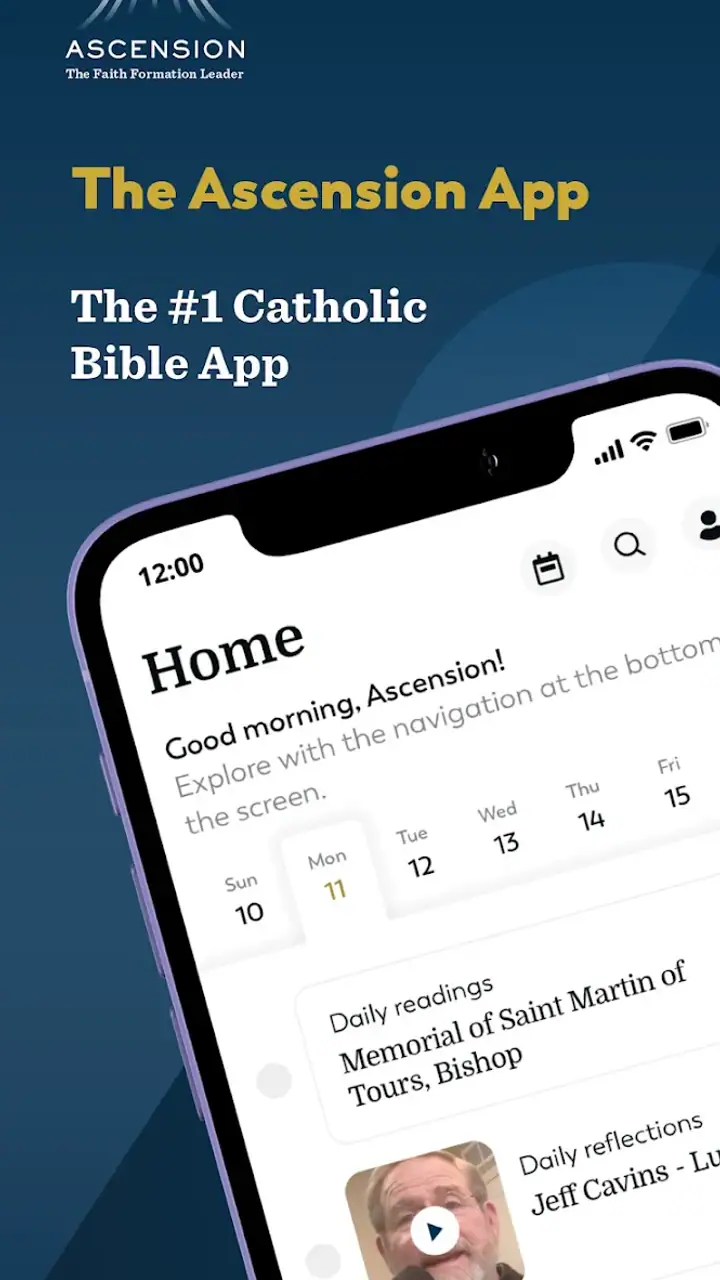
There is also a difference between having audio content and offering a fully adaptable experience. Listening helps people who cannot or do not want to read at a particular moment, but it may not provide the same control as carefully designed reading tools. Users may want adjustable presentation, highly precise navigation, or a consistent way to move through long material. I recommend testing the sections you will use most rather than judging the app only from its welcome screen.
The app is free, but optional in-app purchases range from $8.99 to $59.99 per item. That matters for households managing a tight budget. The free entry point makes trying the experience straightforward, yet users should pay attention before purchasing anything and decide whether the additional material fits their needs. For many people, the free access may be enough to establish a routine; others may consider the paid content worthwhile if they use the app regularly.
Device compatibility is another practical point. The current version is 1.15.21 and requires at least Android 9. Anyone using an older phone should check compatibility before planning around it. That requirement is not especially demanding for many current devices, but it can matter for an older handset kept for simple calls, for a family member’s phone, or for a device with limited storage and performance.
I also would not rely on a single app as the only way to access prayer or Scripture. A printed Bible, parish handout, or saved offline resource can be a useful backup when the phone is unavailable. The digital format is convenient, but convenience should support the habit rather than become a condition for maintaining it.
Three practical ways to get more from it
First, separate listening days from study days. On a busy day, use the Bible in a Year Podcast as an audio habit and avoid forcing yourself to read every passage on a small screen. On a quieter day, use the text to revisit a section that stood out. This approach respects different attention levels instead of treating every session as if it requires the same effort.
Second, create a personal “one entry point” routine. Choose the section you can reach most easily and make it the beginning of your prayer time. For one person that may be Mass readings; for another it may be the Rosary or a familiar prayer. This reduces navigation demands for users with motor, memory, or concentration challenges and makes the app feel less overwhelming.
Third, use the Catechism as a follow-up rather than as the first stop. When a reading raises a question, moving from Scripture to a relevant Catholic teaching can add context. I found that more useful than browsing the Catechism without a reason. It turns the app into a connected reference shelf, while keeping the daily habit focused.
A fourth useful trade-off is to choose the device according to the task. A phone is convenient for a quick prayer, but a larger screen may be more comfortable for sustained reading if the app is available on a compatible device. Audio is better when the hands and eyes are occupied, while text is better when you need to scan, pause, or compare a passage with another resource. The app works best when you let each format do a different job.
Who should install it, and who should look elsewhere?
I would recommend it to Catholics who want one place for daily readings and familiar devotional tools. It is especially appealing to someone beginning a structured Scripture habit, a user who likes guided audio, or a person who is tired of switching between a Bible, prayer app, Rosary guide, and Catechism reference.
It may also suit families who want a shared Catholic resource, provided each person’s preferred way of reading or listening is considered. A parent, grandparent, or new Catholic can use the same app for different purposes, although some users may need help creating a simple route through the content.
I would suggest a different option to readers whose priority is detailed academic study, extensive customization, or a tradition-neutral experience. A dedicated Bible app may offer stronger tools for comparing translations and marking passages. A printed prayer book may be better for someone who wants no notifications, no screen, and no device-related interruptions. People with specific accessibility requirements should also test the free version directly with their usual assistive settings before deciding that it meets their needs.
The app has passed an important practical test for me: it gives several Catholic resources a meaningful relationship instead of merely placing them side by side. That connection is what makes it more useful than a basic Scripture reader for its intended audience. Its limitations are real, but they are mostly tied to focus, screen-based use, and the need to verify personal accessibility preferences on a particular device.
My inclusive verdict
With more than 500 thousand installs, Ascension: Catholic Bible has clearly reached a substantial audience, and I can understand why. It is a free Catholic reference and prayer app with enough variety to support reading, listening, and repeated devotional practice without losing its central purpose.
My final recommendation is positive, with one condition: approach it as a flexible Catholic companion, not as an all-purpose replacement for every Bible, prayer book, or accessibility tool. Its audio option can open the experience to more situations, its organized Catholic content can simplify a daily routine, and its free starting point makes experimentation easy. At the same time, users who need advanced study controls, a screen-free experience, or carefully verified support for particular assistive technologies should keep their usual alternatives available.
For a Catholic reader seeking a practical daily rhythm, this is a thoughtful app worth trying. I would begin with one section, test reading and listening in real situations, and only then decide whether the wider collection belongs in my regular routine.
FAQs for Ascension: Catholic Bible
What is Ascension: Catholic Bible, and what can I use it for?
Ascension: Catholic Bible is a Catholic-focused Bible and prayer app designed for reading Scripture, exploring daily reflections, and supporting a regular faith routine. In addition to Bible content, it may include guided prayers, audio or devotional material, depending on the version available in your region. It is useful for personal study, quiet prayer, and following Catholic readings, but it should complement rather than replace parish guidance or official Church resources.
Does Ascension: Catholic Bible include the complete Catholic Bible?
The app is intended to provide Catholic Scripture resources, but the exact Bible translation, included books, and available features can vary by platform, subscription, or regional release. Before downloading, check the current store description and in-app details to confirm whether all books of the Catholic canon are included. Users who require a particular translation for study should also verify its availability before relying on the app.
Is Ascension: Catholic Bible free to download and use?
Ascension: Catholic Bible may be free to download while offering a mixture of free and premium content. Basic Bible reading or selected devotional features may be accessible without payment, whereas advanced study tools, audio, courses, or expanded resources can require a subscription or one-time purchase. Review the pricing page carefully, especially trial terms and automatic renewal conditions, before starting any premium plan.
Can I use Ascension: Catholic Bible offline or without an internet connection?
Offline access depends on the specific content and version of the application. Some downloaded Bible passages, audio files, or devotional materials may remain available without an internet connection, while account functions, streaming content, updates, and certain study resources may require connectivity. If you plan to use the app during travel or in areas with weak service, download your preferred materials in advance and test them in offline mode.
Is Ascension: Catholic Bible suitable for beginners and daily Catholic prayer?
The app can be a practical choice for beginners because its guided readings, reflections, and prayer-oriented resources make it easier to establish a consistent routine. It may also suit experienced Catholics who want Scripture available on a phone or tablet. However, the experience depends on your preferred translation and devotional style. For deeper theological questions, sacramental preparation, or spiritual direction, consult a qualified priest or trusted Catholic educator.
Pros
- Clear Catholic translation with trusted Church-approved content.
- Includes daily readings
- prayers
- and devotional resources in one app.
- Helpful navigation makes finding books
- chapters
- and passages simple.
- Useful offline access for reading without an internet connection.
- Suitable for personal prayer
- study
- and regular Scripture reading.
Cons
- Some features or content may require a paid subscription.
- The interface can feel dated compared with newer Bible apps.
- Limited customization for fonts
- colors
- and reading layouts.
- Audio or media features may depend on device and connection quality.
- Not ideal for users seeking extensive Protestant study materials.


